

Manufacturer news from Pritidenta GmbH
Color Control Through the Sintering Process—A New Method at pritidenta®
Published on
Dental technicians who demand the highest standards of aesthetics and precision know that standard solutions quickly reach their limits when it comes to color matching for zirconia. Those seeking more shades, design options, and control will now find an innovative solution at pritidenta. The company specializes in the development of high-quality zirconia products, such as priti®multidisc ZrO2, available in various levels of translucency. Two alternative sintering programs have been developed that allow the color appearance of restorations to be specifically varied—without compromising the safety or material properties of the zirconia.
Color Control Through the Sintering Process
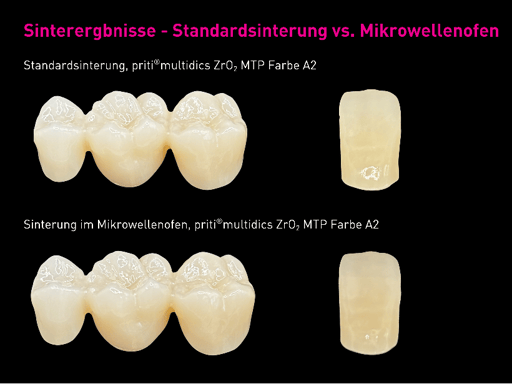
The default color of zirconia can be controlled within defined limits. The key factor in the pritidenta sintering processes is the amount of heat applied during sintering:
- More heat → a lighter, more subtle color
- The lightness value (L*) increases
- The red (a*) and yellow (b*) components decrease
- Less pigment → a more intense, warmer color
- Brightness (L*) slightly reduced
- Red component (a*) increased
The sintering process thus opens up new possibilities for aesthetic fine-tuning. The programs were successfully tested by pritidenta application engineers on 1- to 14-unit zirconia restorations.
Note: To ensure accurate results, sintering should be performed exclusively in calibrated furnaces. A final temperature measurement using PTC rings (MTH) from pritidenta is recommended.
Tips for Dental Technicians
- The color effect is more pronounced on bridges and larger-scale projects
- PTC rings (MTH) allow for reliable control of the actual heat output
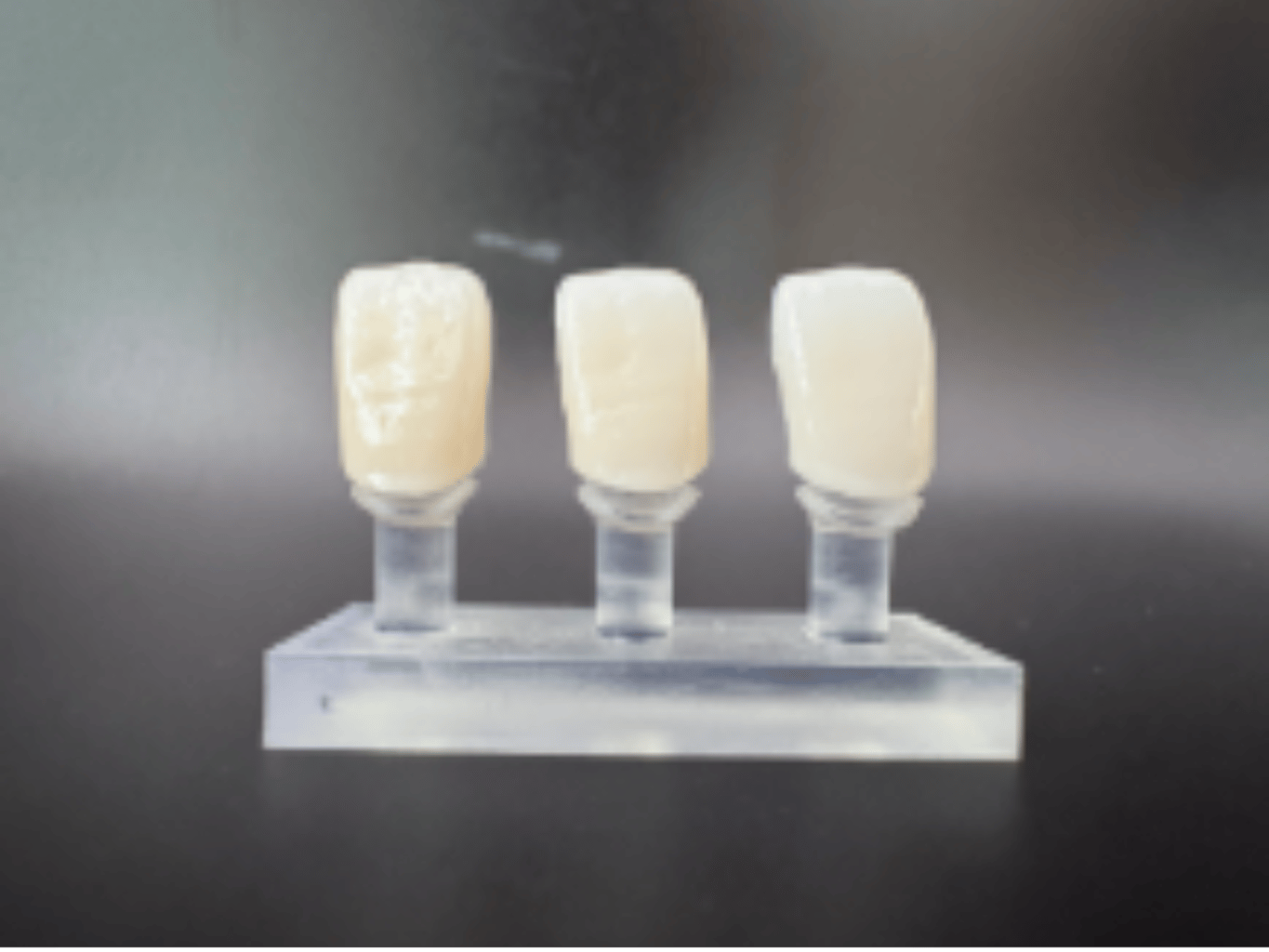
- Differences can be clearly illustrated using bridge swatches under different cycles, as well as two Vita color swatches (light & chromatic).
Benefits at a Glance
✅Expanded color range – lighter & more subtle or more intense & warmer, depending on individual preferences
✅Tested safety—no adverse effects on flexural strength, hardness, or biocompatibility with priti®multidisc ZrO2
✅Reliable process—proven for 1- to 14-unit restorations, safe in calibrated furnaces